Search Results
Search this site
183 results found with an empty search
- Inspiring Mangrove Conservation through the Power of Imagery
For more information and to participate visit the Mangrove Photography Awards site Mangrove Action Project is currently running their ninth Mangrove Photography Awards . The competition invites photographers of all levels around the world to contribute their images to highlight the beauty and fragility of mangrove ecosystems and inspire conservation action to protect them. Mangroves are one of the world’s most important ecosystems, and one of the most threatened. Today, less than half the world’s original mangrove forest cover remains, making the Mangrove Photography Awards a crucial platform to “intrigue people about the magnificent ecological role mangroves play in all of our lives”, according to awards ambassador Dhritiman Mukherjee. There are six categories that appeal to a range of interests and approaches, including a photojournalism multiple image category, allowing the photographer to tell important mangrove stories. This year’s competition will be judged by conservation photographers Octavio Aburto, Daisy Gilardini, Daniel Kordan and Fulvio Eccardi. Last year’s competition received over 2000 entries from 68 countries. You can view the winners here . All entries will be celebrated as an online mangrove exhibition on 26th July, World Mangrove Day. The overall winner will be crowned the Mangrove Photographer of the Year, with winners announced for each of the categories, as well as this year’s Young Mangrove Photographer of the Year, in September 2023. More information on the free competition can be found on the website .
- Using Global Mangrove Watch to Prioritize Blue Carbon Action
Global Mangrove Watch User Story The Global Mangrove Watch (GMW) is an online platform that provides remote sensing data and tools for global monitoring of mangroves. Niharika Iyengar from Wetlands International interviews Jennifer Howard, Vice President of the Blue Carbon Program at Conservation International (CI) on how she is using Global Mangrove Watch. For the last decade, Conservation International has been laying a lot of the groundwork for high-quality, verifiable blue carbon programs. Jennifer works with CI’s country programes to develop blue carbon project pipelines. Together, they identify where the best opportunities are and conduct a range of assessments to guide funding opportunities. Read the full interview with Jennifer Howard on Wetlands International’s website, here .
- Making Advances for Mangroves
Earth Day 2023 On behalf of the Global Mangrove Alliance, happy Earth Day! We hope you had time to reflect on the amazing benefits and beauty of mangroves around the world. Following are updates from the Alliance coordinating group and membership organizations. For Your Calendar – MMM6 A variety of members from across the Global Mangrove Alliance plan to attend the sixth Mangroves, Macrobenthos, and Management conference (MMM6) this year in Cartagena, Colombia from July 24-28. Our Alliance is encouraging all interested in mangrove research and mangroves as a nature-based solution to attend and build connections with other experts and stakeholders. More information on the conference is available at https://mmm6.co/ . Coordinating Team Updates The coordinating team of the GMA oversee the Policy, Science, Communications, Membership, Implementation, National Chapters, and Science Working Groups. Science The GMA is having a change of science leadership. Dr Tom Worthington and Associate Professor Chris Brown are the new co-leads of the Science Working Group. Dr Worthington’s (University of Cambridge) research focuses on the development of global mangrove databases to support conservation. This includes leading development of the Mangrove Restoration Potential map and co-leading the Mangrove Restoration Tracking tool. A/Prof Chris Brown of University of Tasmania is research lead of the Global Wetlands Project. He is an expert in using quantitative tools to support conservation actions. Dr Worthington aims to guide the science working group to develop new online tools to support mangrove conservation through the Global Mangrove Watch platform. A/Prof Brown will focus on guiding science to address local-scale conservation needs, as well as increasing participation of scientists from the Asia-Pacific region in the GMA science working group. Policy Adriana Vidal, Senior Policy Advisor on Climate Change, from IUCN’s Climate Change team, is the new coordinator of the policy working group. Adriana takes over the great work done in previous years at the GMA on policy advancement in support of mangroves, starting with reinforcing the working group’s role in supporting national chapters. GMA partners and members of this working group are identifying ways to build on their current work and existing GMA tools for this purpose. Moreover, the group will continue generating opportunities and leveraging the GMA, its tools, and the Mangrove Breakthrough across international platforms for climate and biodiversity. New Member Spotlight – IUCN France IUCN French National Committee is the network of French members and experts of the International Union for the Conservation of Nature. Among its seven programs, one is dedicated to French Overseas Territories with various projects and initiatives, including the French Tropical Wetlands Network which oversees the French Mangrove Monitoring Network aka ‘ROM’. ROM brings together those who utilize mangroves together with managers, users, public institutions, associations, and scientists to support mangrove conservation efforts in all French overseas territories located in the Caribbean, Amazonia, Indian Ocean and Pacific regions, through capacity building, monitoring and alert, data gathering and analysis, citizen science and education. To that end, ROM regularly conducts trainings and workshops to promote best practices and inform the network on latest legal and technical advances, facilitates exchange of expertise and promotes regional cooperation. ROM has also developed several decision-making tools such as a restoration guide, a national cartography of mangroves and diachronic analyses, national mangrove indicators, and a mobile app to help identify mangrove species and report disturbances and fauna sightings such as crabs, mollusks, birds, fish or mammals. Its goal is to keep building bridges between science, policy and management to advance mangrove conservation in French territories. © Conservation International/photo by Sterling Zumbrunn
- Not All Mangroves are Equal
Improving carbon baseline estimations with high-resolution remote sensing analyses. Panama has decided to put Nature-based Solutions at the core of its climate strategy, with Blue Carbon playing a prominent role in its current climate ambition. As such, the conservation and restoration of mangroves are among Panama’s primary objectives to achieve its climate goals. However, the significance of Panama’s mangroves extends beyond their contribution to the local climate goal. Despite Panama’s relatively small size, its location as a bridge between North and South America makes it a biodiversity hotspot with particular importance for migratory birds throughout the Americas. Thus, gaining knowledge of the ecosystems where birds inhabit, including mangroves, is crucial. Figure 1 © Audubon Americas Estimating the carbon baseline is one of the first steps towards carbon-focused management, conservation, and restoration of mangroves. To develop the most detailed carbon baseline possible to support Panama’s climate ambition adequately, we have been conducting a collaborative effort to map the spatial distribution of different mangrove communities in the Bay of Parita and the Bay of Panama over the past year ( e.g ., Fig. 1) through the Blue Natural Heritage project. Our experimental approaches include traditional supervised classification parallel to cutting-edge alternatives for high spatial resolution remote sensing analyses, such as semantic segmentation using convolutional neural networks (CNN). The later approach comprises the photo interpretation of high-spatial-resolution images to delineate canopies of the target mangrove species (Figure 2a). These masks are used as references to train a CNN algorithm, like U-Net or DenseNet (Figure 2b). The results are supervised segmentations with a multi-class classification output (Figure 2c). These methods are revolutionary as they learn from the images’ reflectance values, texture, and context. Figure 1 © Audubon Americas The collaboration includes the participation of researchers from the Environmental Biogeochemistry Laboratory (UMAG, Chile), Universidad de la Frontera (Chile), Center for Climate and Resilience Research (CR2, Chile), Universidad Adolfo Ibáñez (Chile), Data Observatory Foundation (Chile), McGill University (Canadá), as well as local GIS and mangrove specialist collaborating with Audubon Americas. Funding for this work included ANID Fondecyt Iniciación 1120024 and BID-UK Blue Carbon Fund PN-T1233 executed by the National Audubon Society. Our preliminary results suggest well-defined species distribution patterns with distinct carbon stocks across the Bay of Parita (Ag, Avicennia germinans ; Rm, Rhizophora mangle ; Rr, Rhizophora racemosa ; Ab, Avicennia bicolor ; Lr, Laguncularia racemosa ). These analyses were conducted by Victor Hinojosa1,2, Juliana Chavarria3, José Miguel Guevara3, Alejandro Miranda1,4,5, Javier Lopatin4,6,7, María Alejandra Bravo6, and Jorge Hoyos-Santillan1,3,4. Our results, together with NASA GEDI data, Planet Satellite Imagery, and field data will contribute to improve the current estimations of aboveground and belowground carbon stocks in Panama’s mangroves. The scope of this study could readily extend to a national level (~ 178,000 ha) based on the several existing maps of mangrove cover in Panama. 1Environmental Biogeochemistry Lab, University of Magallanes (Chile) 2University of Chile (Chile) 3Audubon Americas (USA) 4Centre for Climate and Resilience Research (CR2) (Chile) 5Departamento de Ciencias Forestales, Universidad del Frontera (Chile) 6Universidad Adolfo Ibañez (Chile) 7Data Observatory Foundation (Chile) Written by: Jorge Hoyos-Santillan (PhD) Associate Researcher, University of Magallanes, Chile Associate Professor, University of Nottingham, UK Blue Carbon Specialist, Audubon Americas, US
- Mangrove Conservation and Restoration in Mexico
Highlighting the Role of Communities and Intersectorial Collaboration. Updates from the Global Mangrove Alliance-Mexico National Chapter: The GMA’s Mexico Chapter had a very active and successful participation during the VI Mexican Congress of Mangrove Ecosystems held from March 29 to 31, 2023. During three days with researchers, students, government and civil society from 7 countries and 42 organizations presented, and discussed papers and initiatives, using new information technologies, on the state of mangrove ecosystem research, education and management in the face of global change. In addition to being one of the sponsors of the congress, the Mexico Chapter gave a training course, led an open dialogue table with community representatives, a blue carbon symposium, and more. Some of the highlights of these activities are mentioned below: The WWF Mexico team led the Global Mangrove Watch Training Course to 34 people from different sectors. The course began with a brief introduction to the GMA and the state of the mangroves in Mexico and the world. The functionalities of the GMW platform were presented as a fundamental tool to provide solid, reliable, free access and almost real-time updated data and information to advance in the conservation, restoration and sustainable development of these ecosystems. In the Magisterial conference entitled “The state of the world’s mangroves – Strategic alliances for the mangroves of Mexico” Pilar Jacobo explained the trajectory and joint work of the Mexican Alliance for the Ecosystems Restoration (AMERE by its acronym in Spanish) and the Global Mangrove Alliance (GMA). These alliances seek to create a space for the integration of different actors, and support the dissemination of information, the linking of actors and the exchange of experiences, related to ecological and productive coastal-marine restoration in Mexico. The importance of collaboration between NGOs, governments, industry, local communities and funders around a common goal was highlighted. In the Mangrove Restoration Communities Open Dialogue Table, the World Resource Institute facilitated a discussion session among communities engaged in mangrove restoration. Community representatives from various states gathered to exchange their experiences and needs. The conversation was approached from a gender perspective, exploring topics such as the double workload and the challenges that women face in traditionally male-dominated environments. This marked the second congress to provide space for community-led dialogue and communication. The hybrid Symposium “Blue Carbon Bonds: Voluntary Market” began with a presentation by Tannia Frausto from WildCoast introducing the Voluntary Carbon Market and the process for certification by Abbey Garcia from Climate Action Reserve (virtual). Afterwards, Norma Arce from Conservation International gave a presentation on Good Practices for blue carbon projects, emphasizing what a high-quality project means and the importance of safeguarding local communities, the integrity of ecosystems and biodiversity. Then Claudia Díazgranados from Blue Carbon presented virtually the journey and achievements of the “ Vida Manglar ” Project in Colombia. Finally, the symposium closed with an intervention from the private sector by Nikola Bricic from Vida Carbon .
- Filling Gaps on Emission Data in Kenya
Global Mangrove Watch The Global Mangrove Watch (GMW) is an online platform that provides remote sensing data and tools for global monitoring of mangroves. Elizabeth Wamba from Wetlands International Eastern Africa interviews Eva Ntara, Wetlands Consultant at FAO on how they are using Global Mangrove Watch for filling gaps on emission data for FAO Kenya. The Food and Agriculture Organization of the United Nations (FAO) and the Kenya Forest Service began work on Improving Measurement for Payments to Reduce Emissions and Strengthen Sinks – IMPRESS – a globally relevant pilot project in Kenya for countries wishing to move towards high-integrity forest monitoring systems enabling access to climate finance. Funded by the UK Government under their Partnering to Accelerate Climate Transition (UKPACT) program, IMPRESS will support Kenya’s progress towards the Sustainable Development Goals and its long-term development plan. Read the full interview from Wetlands International here . Eva with Dr Stanley Nadir of Kenya Forest Research Institute. © Wetlands International
- Mangrove Outcomes at COP27
Last November at the UN Climate Negotiations (COP27) in Sharm-El Sheikh, Egypt, the GMA in collaboration with the UN Climate Change High-level Champions launched the Mangrove Breakthrough , a science-based, measurable, and achievable goal for non-state actors and governments to collectively restore and protect mangroves at scale. The Mangrove Breakthrough aims to secure the future of 15 million hectares of mangroves globally by 2030 through collective action on: halting mangrove losses, restoring half of recent mangrove losses, doubling the protection of mangroves globally, and ensuring sustainable long-term finance for all existing mangroves by achieving an investment of 4 billion USD by 2030. At COP27, Parties continued to build on the progress made in Madrid (COP25) and Glasgow (COP26) to strengthen ocean-based climate action under the UN Framework Convention on Climate Change (UNFCCC) and in national climate goals. The importance of ocean-based action was recognized in the COP27 decision text, which encouraged Parties to consider how to incorporate ocean-based actions, such as mangrove restoration and conservation, in their national climate goals and implementation plans. Parties also called for additional structure for future Ocean and Climate Change dialogues, held each June at the mid-sessional conference, to allow for in-depth discussion on specific sets of challenges and opportunities, such as blue carbon action. Future dialogues will be facilitated by two co-facilitators selected biennially by Parties, who will be responsible for deciding the topics for and conducting the dialogue in consultation with Parties and observers. The continued momentum on ocean-based climate action is encouraging, and increased structure in the annual Ocean and Climate Change dialogue will ideally lead to stronger outcomes and integration of actions into ongoing UNFCCC processes and national climate goals. The Global Mangrove Alliance and Global Mangrove Watch teams launched two policy briefs prior to COP27 that detail how national policymakers can integrate mangrove ecosystems into climate and wetlands policy frameworks. These briefs continue to serve as helpful resources for parties and countries to apply the Global Mangrove Watch as a tool for target-setting, monitoring, and reporting on mangrove ecosystems. Integrating Mangrove Ecosystems into NDCs with the Global Mangrove Watch Supporting the implementation of the Ramsar Convention through the Global Mangrove Watch
- UN Recognizes Building with Nature Indonesia’s efforts
World Restoration Flagship Award The United Nations has recognized Wetlands International’s Building with Nature Indonesia initiative to protect Indonesia’s coast against flooding as one of 10 pioneering efforts to revive the natural world. The UN designated the push, which is using mangrove trees to form a natural barrier against the sea, as one of its inaugural World Restoration Flagships. These initiatives, which are eligible to receive UN support, funding or technical expertise, showcase how environmental advocates are mending damaged ecosystems across the planet. Human activity has significantly altered three-quarters of the Earth’s land and two-thirds of its marine environment, pushing 1 million species towards extinction. The community in Demak celebrating the award together. © Wetlands International The announcement came as leaders gathered in Montreal, Canada for the UN Biodiversity Conference , where governments from around the world will agree to a new set of goals for nature over the next decade. Talks are expected to include a potential global target for ecosystem restoration. Read the full extent of this award and find more resources about the Building with Nature initiative from Wetlands International Wetlands International CEO Jane Madgwick receiving the World Flagship award certificate during Restoration Day at CBD COP15 in Montreal. © Wetlands International
- Uniting Global Mangrove Ambition
Climate change is the biggest threat of our time. But with nature-based solutions, like mangroves, we can check the rate of change and adapt to our changing planet. Our Alliance’s new goal to halt mangrove loss, restore half of recent losses, and double the protection of mangroves globally by 2030 is for the future of our climate, coastal peoples, and biodiversity. We can’t reach these ambitious targets alone and depend on local and national policy action, financing, and partnership with coastal communities to make tangible progress towards a thriving mangrove future. Many commitments towards policy action and financing will be made this month during the Climate COP27 and Wetlands COP14 to build on Nationally Determined Contributions to the Paris Agreement. These growing and widespread ambitions towards mangrove conservation show a clear need to unify the global approach. That’s the intention of The Mangrove Breakthrough —launched today. Our Alliance, in collaboration with the UN Climate Change High-level Champions, are calling for signatories to commit to a shared global target and create an investment ready pipeline for mangroves. The Mangrove Breakthrough aims to use collective action to secure the future of 15 million hectares of mangroves globally by 2030 in alignment with the goals of the Global Mangrove Alliance and by ensuring sustainable long-term financing by achieving an investment of 4 Billion USD by 2030 to conserve and revitalize these coastal ecosystems. Current signatories to the breakthrough include Global Mangrove Alliance members, the Ocean Risk and Resilience Action Alliance (ORRAA), and Salesforce, among many others. To join this Breakthrough framework, contact Emily Goodwin and Ignace Bedouin . There are many other events happening in the mangroves, climate, and ocean space in the next few weeks. For a list of events that members of the Global Mangrove Alliance are involved in, click here . For more information on the work being done by Alliance members, read our full newsletter, available here . © WWF-Malaysia / Mazidi Abd Ghani
- Mangroves: The Unsung Climate Heroes
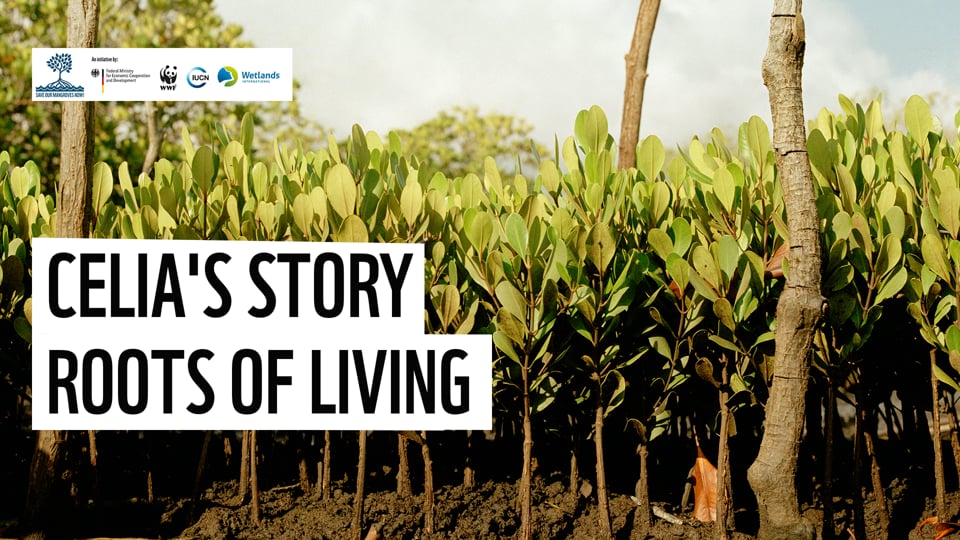
Interview with Célia Macamo, Biologist and Mangrove Expert When Célia Macamo was young, she dreamed about being a doctor. Today she says she is thankful that she failed the entrance exam for medicine because it allowed her to pursue her passion for nature and teaching. Célia is a lecturer and researcher at the Eduardo Mondlane University in Mozambique. Her field of research is in mangrove forests ecology, management, and conservation. In this interview, she talks about her road to becoming a biologist, why mangroves are essential for mitigating the effects of climate change and what gives her hope for the future. How did your interest in becoming a biologist start? I initially wanted to study medicine, but then, halfway through, I realized that I didn’t want to be a doctor and had always had a passion for nature. So, I took the entrance exams. Medicine was the first option and biology was the second. I failed the first option, entered the second option, thank God, and that’s it. I started studying and as I did, I realized that I wanted to be a teacher and I really enjoyed what I was doing. What is your research focus? My specific area of expertise within mangrove conservation is ecology. We look at understanding the system and how it works. We assess the conservation status to understand whether the forest is healthy or degraded, whether there is any impact of activities, and what actions can be adopted to return the system to a good condition in case it is degraded. Why mangroves? What is so particular about these ecosystems? I realized the importance of mangroves when I found that a lot of what we have comes from the sea. Mangroves are unique in the variety of resources, goods and services that they provide to communities, like wood, crab, shrimp and fish that are important food sources and livelihoods for coastal communities. And they protect the coastlines against the cyclones that hit Mozambique yearly. “Nature is able to adapt. The problem is when you have negative human interference.” – Célia Macamo Why are mangrove so important in our fight against climate change? Mangroves have a great capacity for sequestering and storing carbon which reduces the impact of the greenhouse gas effect. This is due to their peculiar structure. There is the upper part of the tree but also the underground parts, those peculiar roots. It is a very extensive system, different of terrestrial plants, that has an incredible ability to accumulate and store carbon. Cutting them down releases this carbon into the atmosphere, so it is very important that mangroves are protected and preserved. Mangrove also have a certain degree of adaptation and resilience to climate change. For instance, when a cyclone impacts on a mangrove forest, some areas will be lost, some areas will recover, and some will expand to new areas. Nature is able to adapt. The problem is when you have negative human interference. When the forest is not so healthy, where there are buildings along the coastline and the mangroves cannot expand landward, mangrove’s ability to respond and adapt starts failing. When mangroves have been cut, their ability to adapt, their resilience, is highly hindered. Why are policy makers then not prioritizing the protection of mangroves? I understand that there are a lot of issues that need to be balanced when a decision is made. I have faced those challenges myself, not at a high level like a country, but still. For example, if we go to a community and we see people exploiting mangroves and cutting mangrove wood and we tell them “You must not cut mangroves”, what we hear back from people is “We don’t have alternatives. Where should I get my food from?”. So, in part I understand the difficulty that decision makers face when passing or enforcing a law or deciding on how restrictive the laws will be. But we need to keep in mind that if we keep using the resources the way we do, we will lose them completely. “It´s amazing when you go to a community and you think that you are going to teach and at the end of the day, you are the one who is learning.” – Célia Macamo © Kent Andreasen / WWF What would you like to see more from policy makers? What is the biggest gap in mangrove conservation? I would like for them to understand the importance of mangroves. There are several communities that depend on mangroves for protecting the coastline and resources. Politicians need to listen more, understand better what is happening within the communities and what their needs are. You work with coastal communities to conserve mangroves. Tell us more about this approach. Currently I am involved in two projects. One is in the Limpopo estuary, which is conducting mangrove restoration and developing alternative income generation activities. The other one is in Nhangau, where the community already has alternative income-generating activities, but they need more support in the restoration component. It has been a very interesting experience. And it´s exciting to see people care a lot more about mangroves now. It´s amazing when you go to a community and you think that you are going to teach and at the end of the day, you are the one who is learning. Last question: what is the most curious thing you found out about mangroves through your research? Recently I found out that the fruit of Sonneratia alba is edible in Mozambique. I was amazed. I had always though that it was a beautiful fruit (it looks like an apple) and that it should be edible. Nature usually gives us signs of what is good for us. Only recently I had the evidence of that, when I found from a community in Nampula province that they do eat the fruit, preparing it as a sauce. Now I want to test it. I know in south Asia they prepare a beverage out of it. All throughout the Western Indian Ocean region activists, conservationists, scientists and government representatives have dedicated themselves to protect and conserve mangroves.Célia Macamo is one of them. Read more about the mangrove messengers from the Western Indian Ocean region here.
- COP26 – Recap
What were the main outcomes for oceans and what do they mean for mangroves? From the 31st of October until the 12th of November, UNFCCC COP26 took place in Glasgow. For two weeks, parties negotiated next steps regarding the development and implementation of the Framework Convention on Climate Change and its agreements and protocols. Between historic breakthroughs or “Blah Blah Blah” the question remains: was COP26 a full success? Or a major disappointment? As is often the case, the truth lies somewhere in the middle. We from Save Our Mangroves Now! (SOMN) had the chance to gain direct insights from on-site participation and can therefore confidently state that outcomes regarding marine and coastal ecosystems met expectations. The achieved increased acknowledgement of the ocean’s role in climate change mitigation and adaptation also means increased acknowledgement of the role of mangroves. Here’s our overview. Speeches, announcements and pledges Particularly present and striking this year were the speeches and calls from the Small Island Developing States (SIDS) . Tuvalu’s Minister Simon Kofe caused a sensation even before COP26 began when he delivered his speech in knee-deep water to draw attention to climate change and rising sea levels and the devastating consequences SIDS have therefore to suffer from. “You might as well bomb us” – were the words of Palauan President Surangel Whipps Jr. who was addressing the slow death his island is facing, while international policymakers are not paying enough attention. Intact mangroves are a temporary life insurance for many coastal communities of SIDS as they protect shorelines from erosion, lower wave heights and storm surge depths and are able to adapt to sea-level rise by moving landwards. Words were followed by actions – or rather announcements. Positive headlines were made by various declarations such as the third “ Because the Ocean” that has been signed by 16 countries so far or the “Ocean for Climate” declaration in which more than 100 civil society organizations united to emphasize the need for governments to include and to value the vital role the ocean plays in global emission reduction. Apart from the open ocean that stores around 25% of the global CO2 emissions, mangroves are real carbon sinks as they store at least 5 times more carbon than terrestrial forests. © WWF-Malaysia / Mazidi Abd Ghani Creating save spaces for marine biodiversity After all these declarations, things became even more concrete with the launch of the Eastern Tropical Pacific Marine Corridor (CMAR) initiative in South America . This mega marine protected area, adopted by Ecuador, Colombia, Panama and Costa Rica, will form a vast marine corridor to protect migrating marine life such as sharks, whales and sea turtles. Within the 500,000 sq km long corridor, international fishing fleets are not allowed. As the Galapagos and other small islands are included in the corridor, mangroves that grow alongside the islands benefit from the protection as there will be less pollution from boats and no large-scale commercial fishing. The initiative therefore marks an important step in protecting the unique marine biodiversity at all levels. However, not only the open ocean received attention, but also the nearshore areas were considered in the negotiations. Thus, the Global Fund for Coral Reefs was launched with the goal of investing $625 million in coral conservation over the next 10 years to strengthen coastal resilience. Mangroves and coral reefs are closely interconnected and rely on each other’s ecosystem services in many parts of the world. Especially in delta areas, mangroves accumulate sediment that would otherwise “bury” corals. Particular mangrove commitments were made by the UAE (United Arab Emirates), Madagascar and Fiji who announced: UAE: within their NDC to increase the number of newly planted mangroves to function as nature-based solution from 30Mio -to 100 Mio until 2030 . Fiji: to plant 30 million trees and dramatically improve the mangrove cover by 2035, as part of action taken on the Leaders Pledge for Nature. Madagascar: within their national strategy to restore 55,000 ha of mangroves by 2030 as they recognize the vital role mangroves play for climate change mitigation and adaptation. To strengthen not only marine ecosystems but also the people living in close connection with the ocean, the launch of the Great Blue Wall initiative marked an important step for the Western Indian Ocean (WIO) Region and partners as it aims to establish a regenerative blue economy by promoting inter alia sustainable use practices for mangroves and thus improving the livelihoods of at least 70 million people in the WIO region alone. Going forward in dialogue With regard to the negotiations, our key ask, namely the establishment of an annual ocean-climate dialogue, was granted by parties. The dialogue was mandated in the Glasgow Climate Pact and provides the urgently needed space for further recognition and mainstreaming of ocean-climate action – including the sustainable management of mangroves. Ocean-based mitigation and adaptation is key to fight climate change and reach carbon net zero. Also, blue carbon was for the first time referred to specifically in the decision related to non-market approaches in voluntary international cooperation to enhance implementation of NDCs. As mangroves are among the blue carbon heroes, this admission of blue carbon relevance could be the beginning of a new chapter in mangrove conservation. These are just examples of the numerous ocean-related decisions and commitments that have been made during the two weeks of the COP in Glasgow. We are glad to see the role of the ocean in addressing climate change widely recognized and considered during the negotiations. But “just” endorsing is not enough. Whether these promises will remain empty or turn into action remains to be seen, but we welcome the policy makers’ new direction and provide full support. Ocean Action is Climate Action! © WWF / Martina Lippuner Sources: Tuvalu Minister Speech in water ‘We are sinking’: Tuvalu minister gives Cop26 speech standing knee deep in seawater – video | World news | The Guardian “You might as well bomb us” – speech Cop26: ‘You might as well bomb us,’ says president of Palau – video | World news | The Guardian Marine Corridor: Latin American countries join reserves to create vast marine protected area | Ecuador | The Guardian UAE 100 Mio Mangroves COP26: UAE to plant 100 million mangroves by 2030 under Paris Agreement – News | Khaleej Times Great Blue Wall Launch Global launch of the Great Blue Wall | IUCN Final Decision Text: WWF Oceans Practice Statement on Outcome of COP26 | WWF ( panda.org )
- Launch of the Mexico National Chapter
At the Second Mangroves of America Congress. The Mexico National Chapter of the Global Mangrove Alliance was launched at the Second Mangroves of the Americas Congress in Mérida, Mexico on October 13, 2022. The event brought together the organizers from WWF-Mexico, TNC-Mexico, WRI-Mexico, Wild Coast, and Conservation International-Mexico. A panel event introduced the Chapter and a half day workshop took place the following day. This chapter will be nested within the Coastal Marine Working Group of the Mexican Alliance for Ecosystem Restoration (AMERE), whose first meeting was also held during the Congress. AMERE is led by WWF, World Resources Institute (WRI), and Reforestemos México. Panelists: WRI-Mexico Forests lead: Javier Warman - representative of AMEREWWF-Mexico, Adaptation Coordinator: Alejandra CalzadaTNC-Mexico, Climate Change Lead: Yves PaizCI-Mexico, Vicepresident: Leticia GutierrezWild Coast, Climate Change Manager: Tannia Frausto © Emma Barnes / WWF-US It is increasingly clear that national and local stakeholders will be the catalyst in implementing improved management, conservation, and restoration of mangroves. National Chapters are the exciting new pathway forward that the Global Mangrove Alliance will use to activate that catalyst and move towards our goal of Halting Loss, Restoring Half, and Protecting Double of mangrove ecosystems globally. Conservation around Mexico is already in progress at local, regional, and national levels. The Mexico National Chapter of the Mangrove Alliance will provide an opportunity for all groups working in mangrove conservation to come together under a common vision and generate national attention while still focusing within their own niche towards 2030 restoration, biodiversity, and climate goals. In addition to conservation, “work with the people and for the people” was repeated throughout the launch events. Mexico’s coastal communities are closely tied to the benefits the mangrove ecosystems on both the Gulf of Mexico/Caribbean and Pacific coasts provide and the National Chapter is dedicated to incorporating community perspectives and leadership into long-term goals and management. This will be done by linking social issues with environmental issues when financing projects, strengthening policies, and implementing conservation objectives. Pedro Alfonso Lopez Gonzalez (left), president of Sociedad Cooperativa de Produccion Pesquera en General y Acuicola Ostricamichin showing Pilar Jacobo (right), WWF Mexico Nature-based Solutions Coordinator their oyster farming operation near Boca de Camichin, Nayarit, Mexico. © Jason Houston / WWF-US Now that the Chapter has launched, next steps are to design the governance and a work plan for the National Chapter and the AMERE Coastal-Marine Working Group. This will happen in the upcoming days, where the stakeholders will participate in a workshop to start drafting the work plan. Future activities could include the development of national tools or products like a restoration agenda for Marismas Nacionales. More information will be shared as plans develop. If you are interested in joining the Mexico National Chapter of the Global Mangrove Alliance, contact Pilar Jacobo at pjacobo@wwfmex.org